
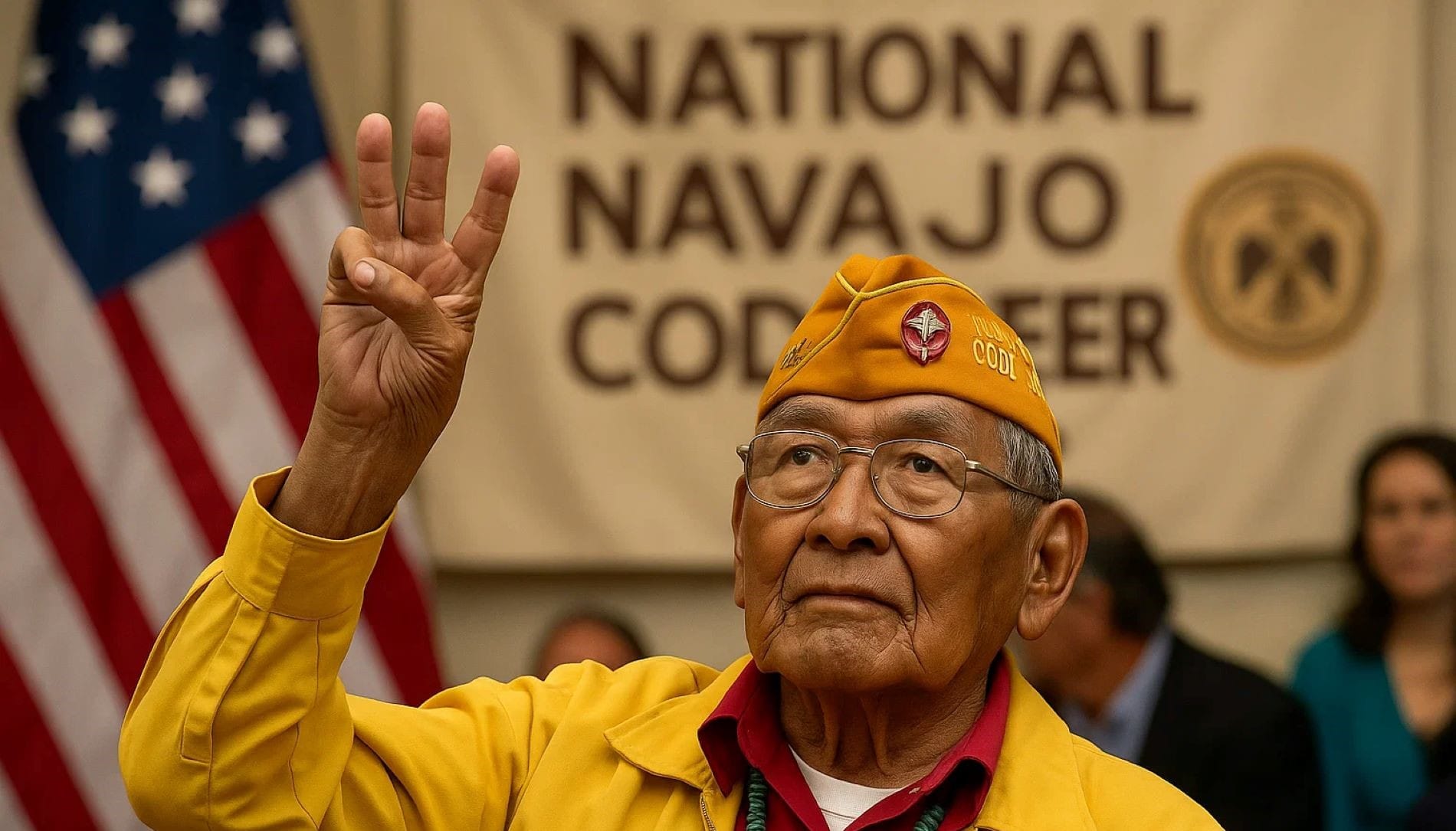
Every year on August 14, we pause to remember and honor the extraordinary contributions of the Navajo Code Talkers, whose bravery and brilliance helped turn the tide of World War II. Their story is one of courage, cultural pride, and a language that baffled enemies and protected American lives.
Whether you’re posting on social media, preparing a speech, or simply reflecting on this historic day, the following quotes help us remember the unshakable spirit of these warriors. These words serve not just as remembrance, but as a call to preserve history and celebrate heritage.
The Navajo Code Talkers were a group of elite U.S. Marines, all from the Navajo Nation, who used their native language to develop and transmit an unbreakable code used during World War II. Their communication skills proved critical in U.S. victories across the Pacific Theater, especially during battles such as Iwo Jima, Guadalcanal, and Saipan.
The code was based on the Navajo language—chosen for its complexity, tonal nature, and limited number of non-native speakers. It was so effective that it remained classified until 1968.
🧠 Why the Code Was Unique
While other military codes had been deciphered by enemy forces, the Navajo code remained intact throughout the war. It was fast, accurate, and impossible for the Japanese to crack. One famous instance during the Battle of Iwo Jima saw six Code Talkers relay over 800 messages in two days—without a single error.
🎖️ Recognizing Their Bravery
Despite their heroic efforts, many Navajo Code Talkers returned home with little recognition. It wasn’t until decades later—in 2000—that President Bill Clinton awarded the original 29 Code Talkers the Congressional Gold Medal. Others received the Silver Medal and state-level tributes.
In 1982, President Ronald Reagan officially designated August 14 as National Navajo Code Talkers Day to honor their service and preserve their memory for future generations.
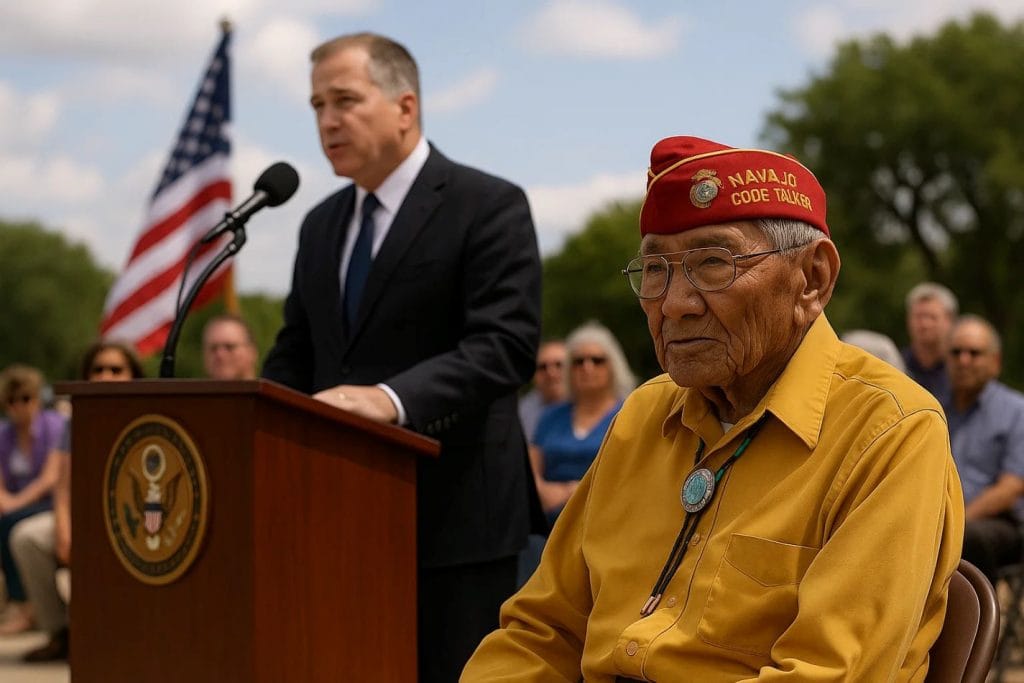
🔹 Famous Historical Quotes About the Navajo Code Talkers
- “Were it not for the Navajos, the Marines would never have taken Iwo Jima.” – Major Howard Connor, 5th Marine Division
- “The Code Talkers saved countless lives and played a pivotal role in every major engagement in the Pacific theater.” – U.S. Senate Resolution, 2001
- “It was the only code never broken by an enemy during WWII.” – National Archives
- “Our language was our weapon, and it helped win the war.” – Chester Nez, Original Navajo Code Talker
- “The Navajo Code Talkers personify patriotism, service, and sacrifice.” – President George W. Bush
- “To every Code Talker, your voice carried freedom. We salute you.” – President Barack Obama
- “They turned language into a fortress and heritage into strength.” – Gen. James Mattis
- “History owes a debt to those who spoke the unbreakable code.” – Smithsonian Institution
- “Even in silence, they spoke volumes with honor.” – WWII Veteran Tribute Speech
- “They were the warriors who conquered silence and secrecy.” – Military Times
🔹 Inspirational Quotes to Honor Their Legacy
- “They spoke the language of warriors and used it to protect a nation.”
- “The voice of the Navajo carried messages that no enemy could decode but every Marine could trust.”
- “Through words, they built a shield. Through bravery, they became legends.”
- “The legacy of the Code Talkers is carved into history with honor and courage.”
- “Their silence for decades spoke louder than most ever could — true heroes of their time.”
- “When courage found its voice, it spoke in Navajo.”
- “In every battle cry, their words whispered freedom.”
- “Their code was secret, but their heroism is clear.”
- “Bravery doesn’t always shout — sometimes it whispers in Diné.”
- “They didn’t just speak a code, they lived a cause.”
🔹 Quotes for Social Media Tributes
- “Remembering the brave Navajo Code Talkers today — warriors whose words won wars.” #NavajoCodeTalkersDay
- “On August 14, we honor the unbreakable code and unshakable courage of the Navajo Code Talkers.” #WWIIHistory
- “They spoke in code, but their message was clear: Freedom is worth fighting for.” #CodeTalkers
- “The language of the Diné helped secure liberty. We honor them today and always.” #NavajoPride
- “Not all heroes wear capes. Some carried radios and changed history.” #NationalNavajoCodeTalkersDay
- “From the battlefield to the heart of history — thank you, Code Talkers.”
- “Courage, culture, code — the legacy lives on.”
- “Voices that made victory possible.” #UnbreakableCode
- “Today, we speak their names — the men who spoke the code.”
- “Echoes of courage in every syllable.” #DinéHeroes
🔹 Reflective Quotes for Speeches or Ceremonies
- “Let us not forget the warriors who used their voices to shield our troops and shape our future.”
- “The Navajo Code Talkers did not just serve — they spoke, they saved, they sacrificed.”
- “Through the hills of Iwo Jima to the sands of Saipan, the Navajo language echoed with resilience and resolve.”
- “In honoring the Code Talkers, we honor the power of culture, identity, and unity in the face of war.”
- “Let the story of the Navajo Code Talkers remind us that sometimes, the quietest voices carry the loudest echoes through history.”
- “Today, their voices rise again — not in war, but in remembrance.”
- “Theirs was a duty done not for medals, but for meaning.”
- “These warriors guarded more than a nation — they guarded heritage.”
- “The code was only part of the miracle. The heart behind it was the true wonder.”
- “They spoke for their people, their country, and their ancestors — and the world listened.”
🔹 Quotes from the Navajo Code Talkers Themselves
- “I was proud to use my language to help my country.” – John Kinsel Sr.
- “We were Marines. We were Navajos. We were Code Talkers.” – Samuel Tso
- “We never talked about it, not even to our families. We were told it was secret.” – Albert Smith
- “It was our sacred language. We guarded it with our lives.” – Thomas H. Begay
- “It was a blessing to be of service, to be remembered means everything.” – Joe Hosteen Kellwood
- “Even when we came home, the war stayed with us.” – Frank Thompson
- “The code was our voice. Our voice was our duty.” – Lloyd Oliver
- “I knew we were doing something big. But I didn’t know the world would one day call us heroes.” – Peter MacDonald Sr.
- “They gave us a mission. We gave them our language.” – William Toledo
- “We did what we had to do. For country, for kin, for code.” – Keith Little
✍️ How to Use These Quotes Meaningfully
Quoting historical figures or events—especially those as profound and important as the Navajo Code Talkers—is not just about inspiration. It’s about responsibility. When you share a quote from or about the Navajo Code Talkers, you’re not only passing along powerful words, but also helping to preserve a vital piece of American and Native history. That’s why context matters.
One of the best ways to use these quotes meaningfully is by pairing them with visual or educational elements. For instance, if you’re posting on social media, consider including a photo of a Code Talker memorial or monument. Seeing the face of a hero or a sacred place where they are honored helps ground the quote in reality. It turns a simple caption into a mini lesson in bravery, sacrifice, and resilience.
Another approach is to give a name and a story to the speaker whenever possible. If you’re quoting a real Code Talker—such as Chester Nez or John Brown, Jr.—take a moment to include a sentence or two about who they were. What battle did they serve in? How did their efforts impact the outcome of the war? A short bio can make all the difference. Suddenly, it’s no longer just a quote; it’s the voice of someone who lived through unspeakable hardship and rose to serve their country with honor.
If you’re planning to use these quotes in educational settings, quote cards are a fantastic idea. One side can feature the quote, beautifully designed or handwritten. The other side could include a brief explanation of who the Code Talkers were, how the code worked, and why it was so critical in World War II. These cards could be used in classrooms, history exhibits, or even mailed out as part of Veterans Day tributes. This small touch helps keep the memory alive in a tangible, shareable way.
Another meaningful application is during public events or commemorations. If you’re organizing or attending a memorial on August 14 (National Navajo Code Talkers Day), reading these quotes aloud and briefly explaining their origin is a respectful way to honor their contributions. Add a moment of silence afterward, allowing the words to sink in. When used this way, quotes become more than just words—they become living memory.
Even in everyday conversations, these quotes can spark curiosity. Share them in newsletters, email signatures, or as part of your classroom’s “Quote of the Day.” Just be sure to follow up with a link, article, or short paragraph that offers more information. Many people still don’t know who the Navajo Code Talkers were, and your quote might be their first introduction.
In a world full of fleeting content, thoughtful presentation goes a long way. By adding even a few lines of context, a powerful quote can shift from a scroll-past post to a lasting moment of remembrance and respect.
🏛️ How Schools and Communities Can Celebrate
National Navajo Code Talkers Day on August 14 is a perfect opportunity for schools and communities to engage with a powerful yet often overlooked part of American history. While honoring these brave men can and should happen year-round, dedicating intentional time in August can have a deep impact—especially when the celebrations are educational, interactive, and meaningful.
🎒 History Projects with Heart
One of the best ways for students to engage with the legacy of the Navajo Code Talkers is through creative projects. Encourage students to choose a specific Code Talker to research. They can create posters, art pieces, written biographies, or multimedia presentations showcasing who the person was and how they contributed to the war effort.
Another engaging idea is to let students work in groups to write and perform short skits that show how the Navajo Code was used during critical battles in World War II. By acting out scenes, students gain a better understanding of the high-stakes environments the Code Talkers operated in, and the incredible bravery it required to carry out their missions under fire.
Even simple timelines or fact sheets about the development and success of the code can make a big impact in helping students visualize the historical importance of these unsung heroes.
🎤 Public Readings and Storytelling Events
A moving way to bring the community together is by hosting a public reading event. These can be held at schools, libraries, local halls, or even outdoor venues. Invite veterans, elders, or community leaders to read powerful quotes by or about Navajo Code Talkers. Pair the quotes with brief narratives or historical background to help the audience connect emotionally.
If possible, invite Native speakers or tribal representatives to share more about Navajo language, culture, and the Code Talkers’ role in U.S. military history. This creates space not just for remembrance, but for respectful cultural appreciation and education.
To make it more interactive, local students can be invited to read, too. Assign them quotes or short bios of real Code Talkers to deliver with pride and understanding. These events don’t have to be large—they just need to be heartfelt.
📱 Social Media and Educational Campaigns
Schools and communities can use their social media platforms to run an educational campaign during the week leading up to August 14. Each day, share a quote, a photo, or a short fact about the Navajo Code Talkers.
Pair each post with engaging visuals: perhaps a black-and-white photo of a Code Talker, a map of the Pacific theater, or a simple image of Navajo lands. Include hashtags like #NavajoCodeTalkersDay, #WWIIHeroes, or #NativeVoices to connect your content with a wider audience.
Encourage students to participate by creating their own digital posters or quote cards. You could even launch a school-wide competition: “Design a tribute to the Navajo Code Talkers,” and post winning entries on the school’s social media or bulletin boards.
These campaigns don’t just raise awareness—they also teach digital citizenship, as students learn how to share meaningful content online with respect and accuracy.
🗣️ Language Spotlights: Honoring Navajo Through Words
A beautiful way to connect deeper with the Code Talkers’ story is to focus on the Navajo language itself. During World War II, this language became one of the most valuable military tools due to its complexity, oral tradition, and lack of a formal alphabet at the time.
Teachers can introduce students to a few Navajo words—especially the ones used in the original code. For example:
- “Besho” = Iron fish (used for submarine)
- “Gini” = Chicken hawk (used for dive bomber)
- “Tłéé’” = Dog (used for scout)
Explain how these words were part of a complex, memorized vocabulary list that the Code Talkers had to know without any written help. Let students try to “code” a few simple English messages using some of the original Navajo code words. This makes the experience hands-on and shows just how brilliant the code system was.
Consider displaying the words with illustrations in classrooms or public spaces for the week leading up to the holiday. You might also collaborate with Native speakers or linguists to ensure the pronunciation and usage are accurate and respectful.
❤️ Final Thoughts
National Navajo Code Talkers Day reminds us that words have power—and when used bravely, they can save lives, shape history, and honor heritage. Whether you share a quote, tell a story, or simply take a moment of silence, your recognition ensures that the courage of these heroes lives on.
Let us keep their voices alive, not just on August 14, but every day we speak of honor, duty, and freedom.
Semper Fidelis. Ahehee’.